Included Health had been talking about shifting to value-based care for over a year. Leadership knew it was the right direction. But six months in, the clinical teams and EPDD roadmap hadn't moved off the status quo. The strategy existed in conversations, not in execution.
The business reality was sharp: Included Health is shifting to two-sided risk contracts where profitability depends on managing total cost of care, not just visit volume. Our platform was still largely episodic. Without risk identification, proactive engagement, and consistent care delivery infrastructure, we had a limited ability to influence member health over time — which meant a limited ability to win or scale these contracts. Someone had to turn that into something buildable. I decided that would be me.
What I did
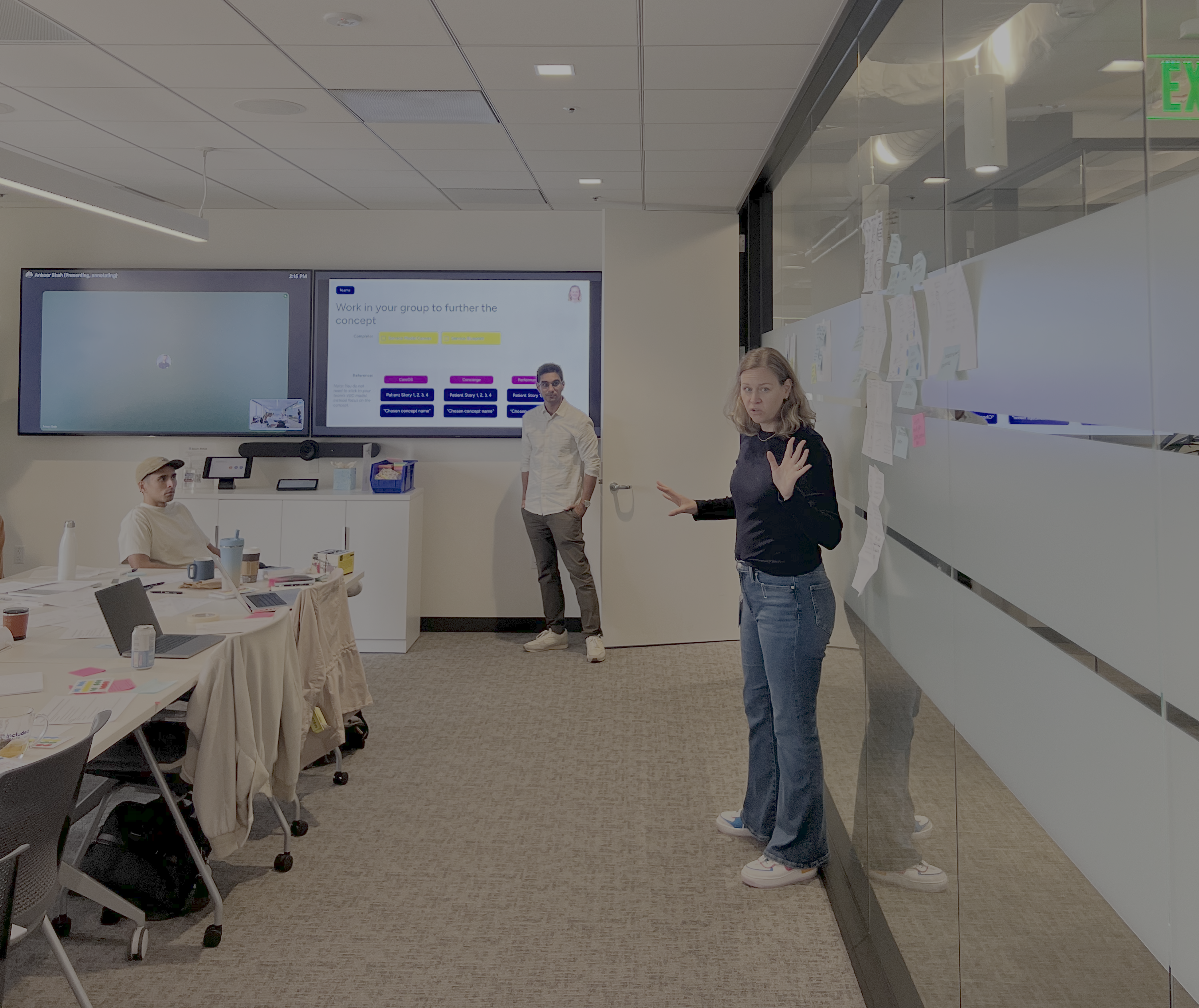
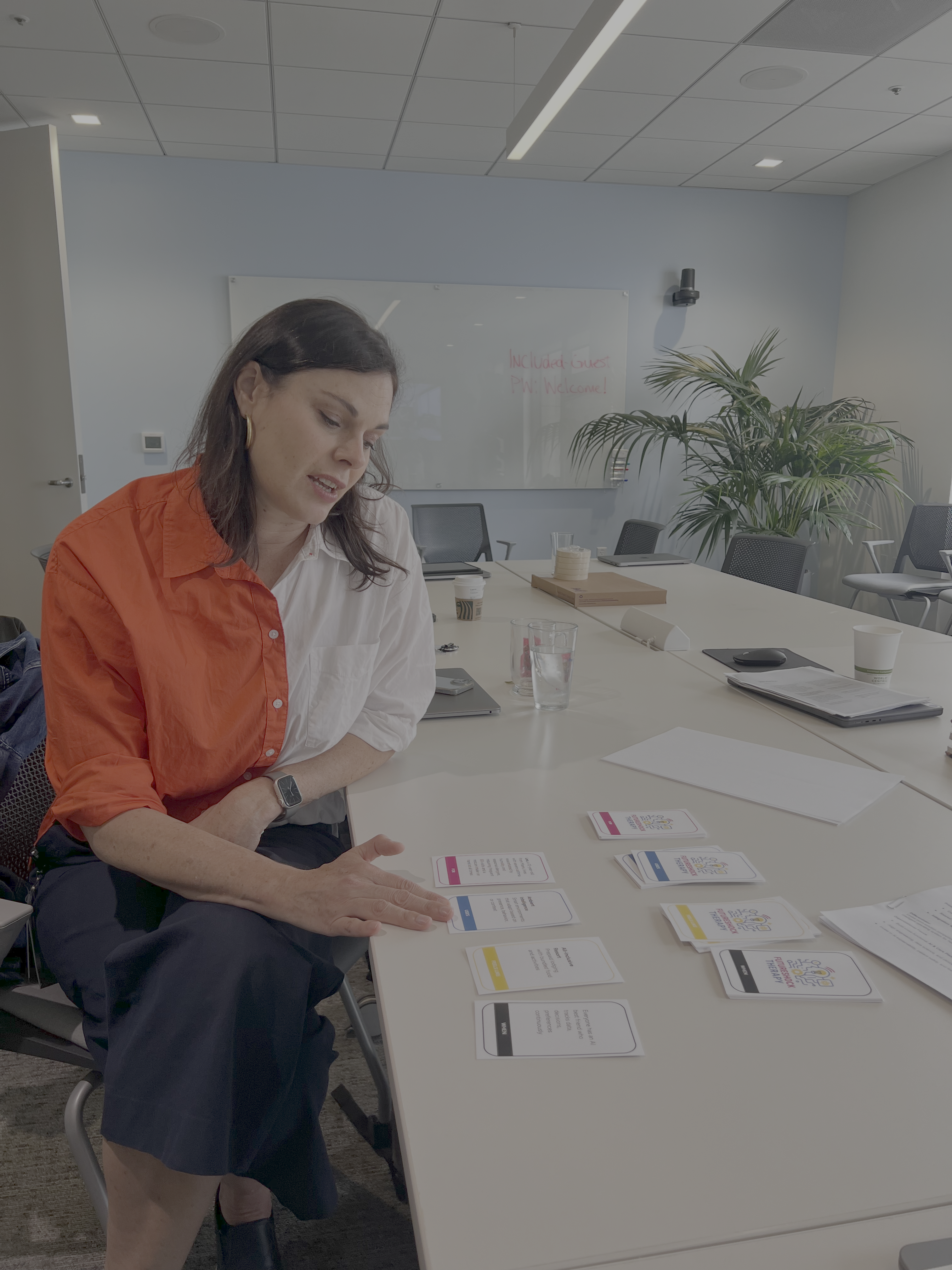
I designed and facilitated a two-day cross-functional strategy sprint with clinical service line leaders, the SVP of Product, and the SVP of Engineering. The COO and Chief Health Officer joined for readouts throughout. We mapped the realities of care delivery, explored where we could have the biggest impact on total cost of care, and defined what value-based care could actually look like inside Included Health — not in the abstract, but as concrete pillars the organization could execute against.
The artifacts and strategic framework that came out of those two days didn't just inform the roadmap. They led to a restructuring of three EPDD pillars and the creation of four new teams — including a new longitudinal care pillar with three dedicated teams, plus a new team and refocused scope within the member app. That's a rare outcome for design-led work, and it reflects how much clarity the sprint created for leaders who had been circling the same conversation for a year without resolution.
Translating ambiguous strategy into something an organization can actually build against — that's some of the most valuable work a design leader can do.
Emily Schmittler
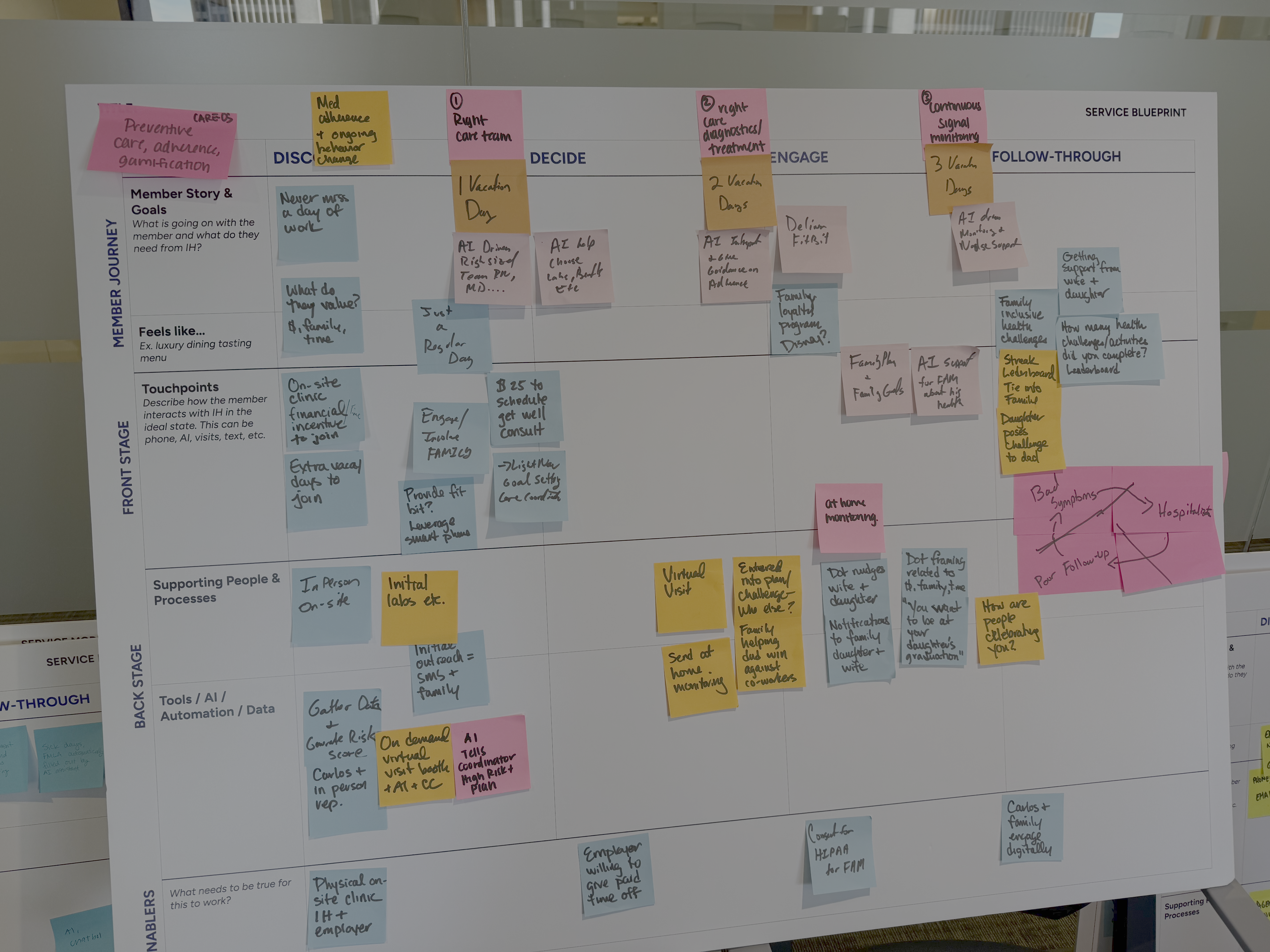
Day 1 — mapping care delivery realities across the full member journey: front stage touchpoints, back stage processes, AI & tooling, and the enablers that make longitudinal care possible
What it's becoming
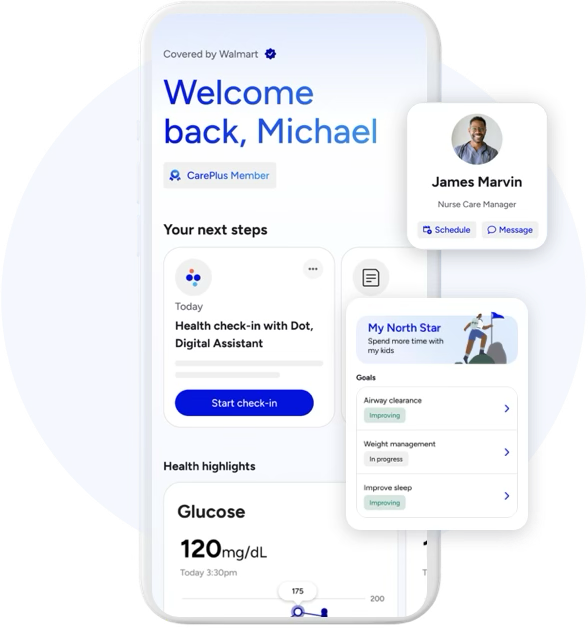
I'm now leading design for a key part of what that strategy unlocked: an AI-driven longitudinal care platform and digital care plans that serve as the living playbook for clinicians, care staff, and AI agents working on behalf of each member. I lead four designers across three EPDD teams, within a group of roughly 40 people building this out.
For members, this means personalized goals, simple checklists, reminders, and progress tracking living directly in the app — so they always know what's next, instead of relying on a static visit summary or paperwork they'll never look at again.
For clinicians, it means standardizing the CareApp so care teams see exactly what the member sees — tasks, history, and context in one view, backed by AI-driven automation that reduces the manual burden of connecting the dots across a member's care journey.
First launches are anticipated in June 2026 for complex use cases like maternity and GLP-1 programs, and October 2026 for all members. This is the infrastructure that makes longitudinal care management possible at scale. Without it, Included Health can't reliably win or grow risk contracts.
What this unlocked
A two-day sprint with the right people in the room produced something a year of conversations couldn't: a shared, concrete direction that leadership could actually act on. The org restructure that followed wasn't incidental — it was the proof that the clarity landed.
What energizes me about this kind of work is that it sits at the intersection of design thinking and organizational change. Getting a room full of clinical and technical leaders aligned around a product vision requires the same skills as great experience design: listening carefully, finding the underlying tensions, and synthesizing complexity into something people can move toward together. The fact that a design leader drove this outcome — not a strategy consultant, not a product executive — says something about what design leadership can do when it operates at the right altitude.
Interested in the full case study? I'm happy to walk through the strategy, the design decisions, and the team dynamics in depth.